

Why Women Want to Have Sex With Demons: The Return of the Antediluvian Predator
The modern dating market is subconsciously demanding a tier of partners that normal human biology can no longer provide

Before the 2010s, finding a spouse was bound by geography. For most of human history, after Christian monogamy took root, men competed inside small, hyper-local pools. Today, that world is gone. Even in the jungles of Myanmar, digital connectivity hands women instant access to a planetary menu of partners. The “passport bros” phenomenon only poured gasoline on the fire, torching what was left of those localized markets.

This is the collapse of local mating markets in real time. Global connectivity now lets women chase genetic and social outliers wherever they live. Nations like Thailand, Singapore, and China are scrambling to reverse plunging birth rates, a crisis fueled in large part by native women’s growing disgust with local men once their horizons stretch worldwide.
The shift is a clean break from the mid-twentieth-century baseline. As sociologists Michael J. Rosenfeld and Reuben J. Thomas noted:
“For the past several decades, the primary intermediaries for meeting romantic partners have been family, friends, primary and secondary schools, and the workplace... The Internet is a new kind of social intermediary. Because it connects people who did not previously share a common social circle, the Internet introduces adults to potential partners they would otherwise never have met.” (Rosenfield)
Yet this sudden globalization of mate choice isn’t some brand-new anomaly. It’s a return to something ancient. The biological hunger for the peak mate has always existed; geography and Christian custom were the only things that ever restrained it. In the pre-Christian world, elite men used power to bypass local competition altogether.
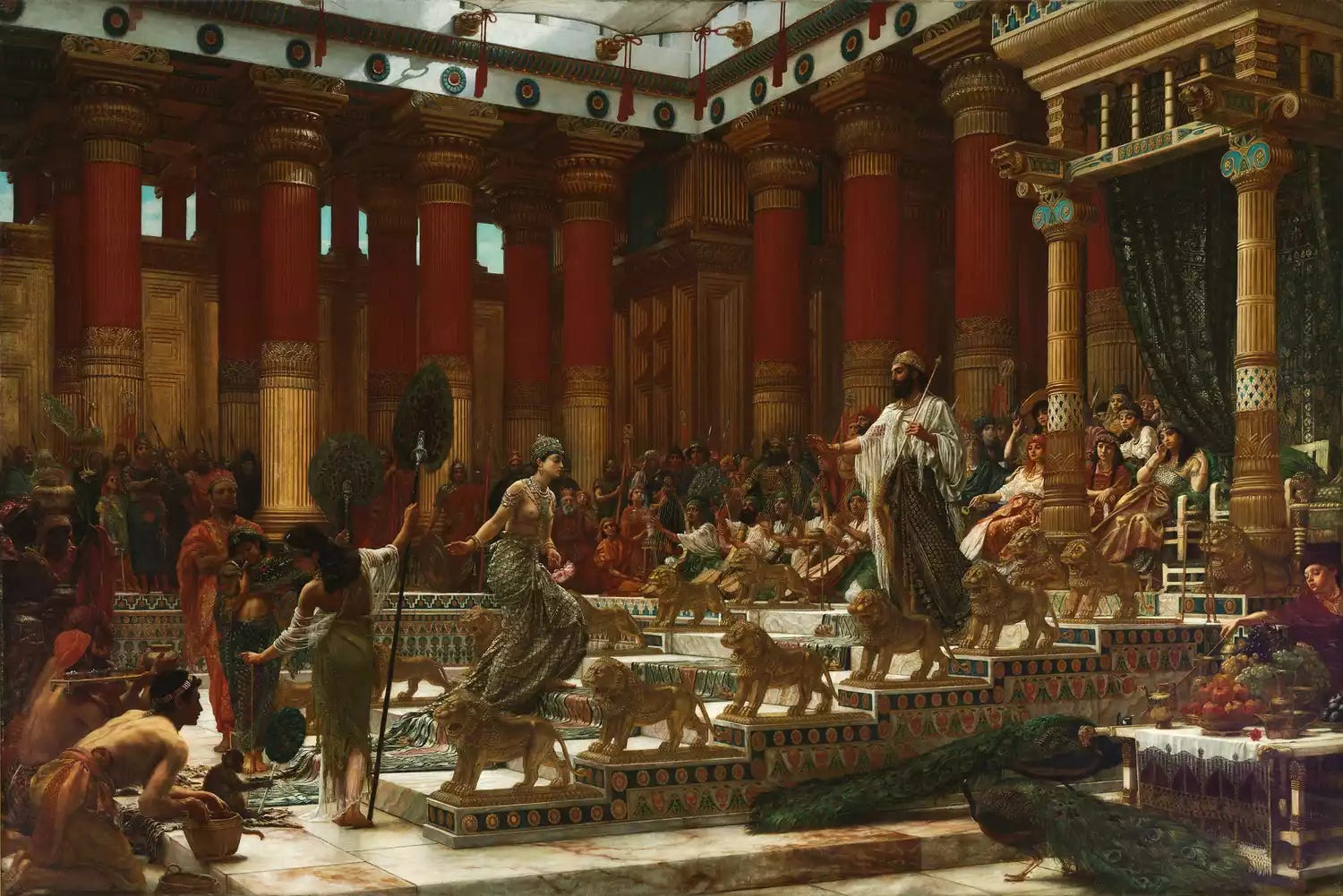
The Ancient Harem and the Collapse of the Male Breeding Pool
Concubinage was baked into the legal codes of Mesopotamia and the Ancient Near East. The system was engineered for the top percentile of males. Beautiful women were systematically harvested from villages and funneled into royal courts. An Amarna Letter (EA 369) shows the Egyptian Pharaoh treating the transaction like any other commodity order:
“He herewith sends to you Hanya, the stable of the archers, along with everything for the acquisition of beautiful female cupbearers: silver, gold, linen garments, carnelian, all kinds of precious stones, an ebony chair; in short, everything beautiful. Total: 40 female cupbearers. The price of one female cupbearer is 40 (shekels of) silver. Send extremely beautiful female cupbearers in whom there is no defect...” (Amarna)
Average men were written out of the reproductive equation.
Modern genomics confirms how brutal that exclusion was. A landmark 2015 study in Genome Research examined global Y-chromosome data and found that, during the rise of complex agrarian civilizations, the female line expanded while the male line slowed to a crawl. At the peak, only one male reproduced for every 17 women.
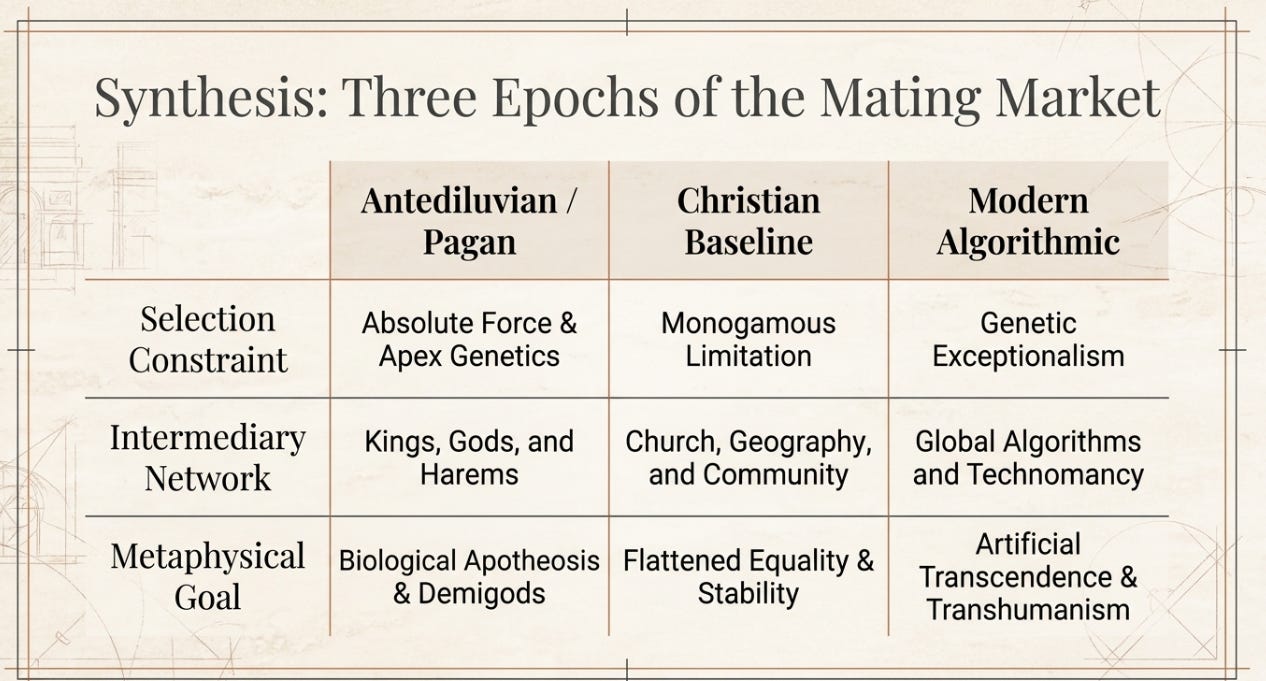
Christianity changed the equation. In Matthew 19:5, Jesus rejected the old polygamous norm and limited a man to one wife. That theological decision flattened the reproductive market and let the vast majority of men secure a mate and pass on their genes.
